Toys That Teach: Selecting Educational Toys for Different Age Groups
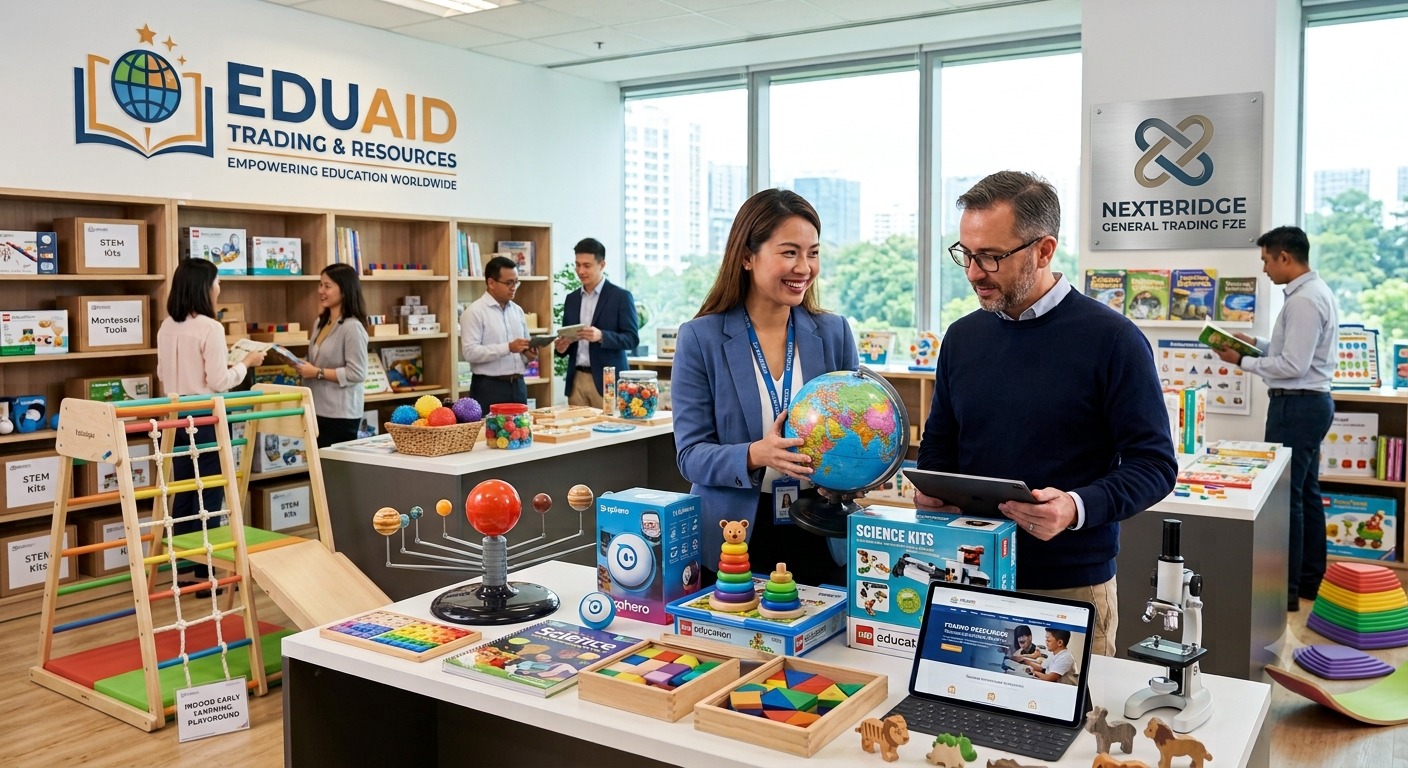
Play is the primary vehicle through which children explore the world, develop new skills, and make sense of their experiences. The right toys — those that match a child's developmental stage while challenging them just enough — can transform playtime into powerful learning opportunities. Yet with the overwhelming variety of toys available on the market, parents, educators, and retailers alike can struggle to identify which toys are genuinely educational and appropriate for each age group. This guide breaks down the best types of learning toys for children from infancy through the pre-teen years, with essential safety guidance for every stage.
Ages 0-2: Sensory Discovery and Motor Development
For infants and young toddlers, every interaction is a learning experience, and the best toys engage multiple senses simultaneously. High-contrast toys with bold black, white, and red patterns support visual development in newborns whose sight is still sharpening. Soft textured toys — crinkly fabric books, silicone teethers with varied surfaces, plush animals with different fabric patches — stimulate the sense of touch and encourage grasping, which builds fine motor skills. Stacking cups and rings teach cause-and-effect relationships (knock it over, it falls) and spatial reasoning at the most fundamental level. Sound-making toys — gentle rattles, musical shakers, simple xylophones — introduce auditory discrimination. At this stage, toys should be lightweight, easy to grasp, and large enough to prevent choking. Mouthing objects is a primary mode of exploration for infants, so all materials must be non-toxic, phthalate-free, and BPA-free, with no small parts that could detach.
Ages 3-5: Building, Pretending, and Creating
The preschool years are a period of explosive growth in language, imagination, and social skills. Building blocks — whether classic wooden unit blocks or interlocking plastic bricks — develop spatial awareness, hand-eye coordination, and early engineering thinking as children experiment with balance, symmetry, and structure. Simple puzzles with 12 to 48 pieces strengthen problem-solving, pattern recognition, and persistence. Imaginative play becomes central at this stage: play kitchens, doctor kits, tool sets, and dress-up costumes allow children to role-play adult scenarios, building vocabulary, narrative thinking, and social understanding. Art supplies — washable markers, chunky crayons, modeling clay, safety scissors — encourage creative expression and strengthen the fine motor muscles needed for writing. Toys for this age group should have no sharp edges or pinch points, and any battery compartments must be secured with screws to prevent access. Art materials should be clearly labeled as non-toxic and conform to ASTM D-4236 standards.
Ages 6-8: Logic, Literacy, and Cooperative Play
As children enter the primary school years, their capacity for logical thinking, sustained attention, and cooperative interaction expands dramatically. Board games become increasingly valuable — strategy-lite games like Sequence, Qwirkle, and Ticket to Ride: First Journey teach turn-taking, forward planning, and graceful responses to winning and losing. Science kits — crystal growing, simple chemistry sets, microscope exploration — channel natural curiosity into structured scientific inquiry. Construction sets grow more sophisticated, with brands like LEGO Technic and K'NEX introducing gears, axles, and motors that teach mechanical principles. Reading games and literacy tools — word-building tiles, story cubes, interactive phonics games — reinforce the reading skills being developed at school through playful practice. Cooperative board games, where players work together against the game rather than competing against each other, are particularly valuable at this stage as they teach collaboration and collective problem-solving.
Ages 9-12: STEM, Strategy, and Creative Technology
The pre-teen years mark a transition toward more sophisticated cognitive abilities: abstract reasoning, systematic problem-solving, and sustained independent projects. Robotics kits — from beginner-friendly LEGO Mindstorms and VEX Robotics to Arduino and Raspberry Pi-based platforms — introduce programming concepts, electronics, and mechanical engineering through hands-on building and coding. Strategy games like Settlers of Catan, Carcassonne, and chess develop complex decision-making, resource management, and the ability to think multiple moves ahead. Advanced science kits covering chemistry, physics, and environmental science allow for deeper experimentation, often with digital measurement tools that connect to tablets or computers. Creative technology — digital drawing tablets, stop-motion animation kits, simple video editing tools — bridges artistic expression and technical skills. At this age, toys and kits should come with clear, well-illustrated instructions, but also leave room for open-ended exploration where children can modify, improvise, and create beyond the prescribed activity.
Safety Considerations by Age
Safety in toys is not one-size-fits-all — it must be evaluated relative to the age and developmental stage of the intended user. The most critical safety consideration for children under three is choking hazard: any toy or removable part that fits entirely within a standard choke test cylinder — roughly the size of a child's throat — is unsafe for this age group. This includes small balls, marbles, button batteries, and toys with detachable small parts. For ages three to six, the primary risks include sharp edges, pinch points in mechanical toys, and loose magnets that can cause severe internal injury if multiple magnets are swallowed. Across all age groups, material safety is paramount: toys should be free from lead paint, phthalates, bisphenol A (BPA), and formaldehyde. Look for recognized safety certifications: the CE mark in Europe, ASTM F963 compliance in the United States, and GCC or ESMA certification for products sold in the Gulf region. Electronic toys must comply with electromagnetic compatibility and battery safety standards, and any toy that connects to the internet must have appropriate data privacy protections, particularly for children under 13.
Conclusion: Balancing Fun with Developmental Value
The best educational toy is one that a child wants to play with — repeatedly, enthusiastically, and in increasingly complex ways over time. While developmental appropriateness is essential, it should never come at the expense of engagement. A toy that is perfectly aligned with educational theory but sits untouched on a shelf has failed in its purpose. When selecting toys, look for open-ended design that allows multiple ways to play — blocks can become castles one day and spaceships the next, while single-function electronic toys often have a shorter engagement lifespan. Prioritize quality over quantity; fewer, well-made toys that support deep, extended play deliver more developmental value than a crowded toy box of superficial novelties. And remember that the most educational component of any toy is often the adult or older child who plays alongside, asking questions, modeling thinking, and extending the play narrative beyond what the child would discover alone.
Interested in Educational Toys?
Nextbridge General Trading FZE sources quality educational toys from trusted manufacturers. Contact us to discuss your wholesale requirements.
 0553226835
 info@nextbridgegeneraltrading.com
 Chat on WhatsApp