Offset vs Digital Printing: Which Is Right for Your Business?
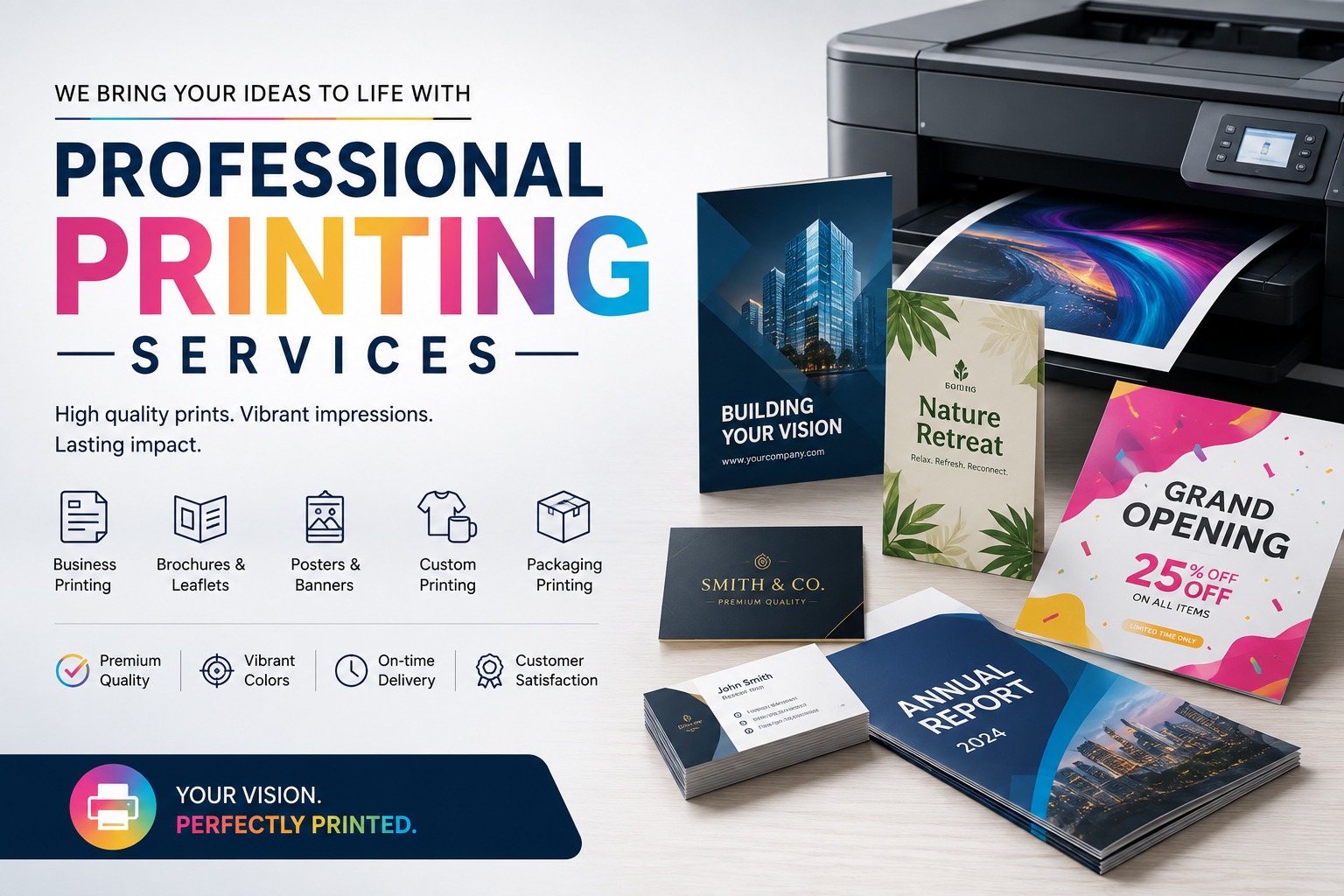
Printing remains one of the most essential services for businesses across every industry — from marketing collateral and packaging to corporate stationery and promotional materials. Yet when the time comes to place a print order, many businesses face a critical decision: offset printing or digital printing? Each method has distinct advantages, cost structures, and ideal use cases. Understanding the differences can help you make informed decisions that balance quality, budget, and turnaround time.
Offset Printing: Precision at Scale
Offset printing, also known as lithographic printing, uses metal plates to transfer ink onto a rubber blanket, which then rolls the image onto the paper. This indirect process is what gives offset its name — the image is offset from the plate to the blanket before reaching the substrate. The result is exceptionally sharp, clean imagery with consistent color reproduction across thousands of copies. For volumes of 500 units and above, offset printing becomes increasingly cost-effective because the fixed setup costs are distributed across a larger print run.
One of offset printing's greatest strengths is color accuracy. Each ink color is mixed precisely using the Pantone Matching System (PMS), ensuring brand colors are reproduced faithfully across every piece. This makes offset the preferred choice for corporate identity materials, product packaging, and any application where exact color matching is non-negotiable. Offset presses also handle a remarkably wide range of paper stocks — from lightweight text papers to heavy cardboards — and can accommodate specialty finishes like metallic inks, spot varnishes, and foil stamping with ease.
Digital Printing: Speed and Flexibility
Digital printing transfers digital files directly onto the printing surface using toner or inkjet technology, eliminating the need for printing plates entirely. This removes the setup costs and preparation time associated with offset printing, making digital the clear winner for short runs — typically under 500 copies — where the per-unit cost remains competitive without any minimum quantity requirements. The absence of plates also means that digital printing can offer true print-on-demand capability, allowing businesses to print only what they need, when they need it.
Perhaps the most transformative advantage of digital printing is variable data printing (VDP), which allows each printed piece to be customized with unique text, images, or graphics. This enables personalized direct mail campaigns, customized event invitations, and targeted marketing materials that would be impossible or cost-prohibitive with offset technology. The turnaround time for digital jobs is also dramatically faster — many digital print jobs can be completed within hours, compared to days for offset projects that require plate production, setup, and drying time.
Comparing Cost, Quality, and Turnaround
The cost breakpoint between offset and digital varies depending on the specific project specifications, but a general guideline applies: for print runs under 500 pieces, digital is almost always more economical; between 500 and 1,000 pieces, the pricing becomes comparable; and above 1,000 pieces, offset delivers progressively lower per-unit costs. In terms of print quality, offset still holds a slight edge in absolute sharpness and color fidelity for high-end applications, though digital technology has narrowed the gap considerably in recent years. However, digital printing offers the advantage of faster turnaround — typically 24 to 48 hours — compared to 3 to 7 business days for offset jobs, making digital the go-to choice for urgent projects.
Choosing the Right Method for Your Project
The right printing method depends on a careful assessment of your project's specific requirements. Start by evaluating your quantity: if you need fewer than 500 pieces with no reprint plans, digital is the practical choice. Consider your quality requirements — if you need exact PMS color matching or are printing on specialty substrates like textured papers or synthetics, offset is likely the better option. Factor in your timeline: if the job is urgent and cannot accommodate plate production and drying time, digital printing will meet your deadline most reliably. Finally, think about customization: if you want each piece to carry personalized information for a targeted marketing campaign, digital printing's variable data capability makes it the only feasible choice.
Conclusion: The Right Fit for Every Scenario
For most businesses, the answer is not choosing one printing method exclusively but knowing when to use each. Corporate brochures, annual reports, premium packaging, and large-volume marketing materials typically justify the investment in offset printing's superior quality and lower per-unit costs at scale. Meanwhile, business cards, event flyers, short-run promotional items, and personalized direct mail campaigns benefit from digital printing's speed, flexibility, and minimal setup requirements. By understanding the strengths of both technologies, businesses can optimize their printing spend while ensuring every project achieves the quality and impact it deserves.
Interested in Printing Solutions?
Nextbridge General Trading FZE can help you source the right printing equipment and supplies. Contact us to discuss your needs.
 0553226835
 info@nextbridgegeneraltrading.com
 Chat on WhatsApp