5 Trends Shaping the Global Carpet and Rug Industry
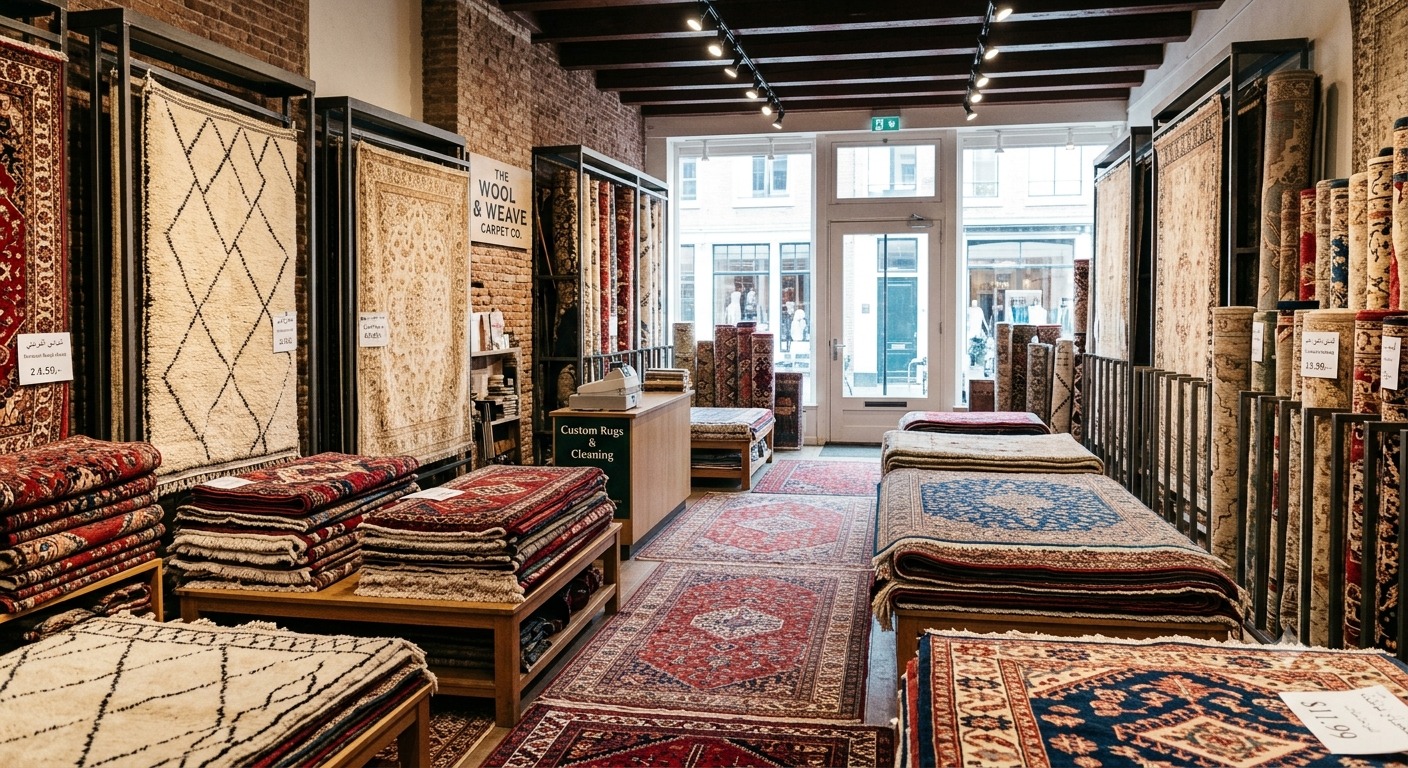
The global carpet and rug industry is undergoing a period of remarkable transformation. Valued at over 70 billion dollars and growing steadily, the sector is being reshaped by shifting consumer values, technological innovation, and changing distribution channels. For retailers, wholesalers, and interior design professionals, understanding these trends is essential to staying competitive in a rapidly evolving market. Here are the five most significant trends shaping the carpet and rug landscape in 2026 and beyond.
1. Sustainable and Eco-Friendly Materials
Sustainability has moved from a niche preference to a mainstream demand. Consumers are increasingly conscious of the environmental footprint of their purchases, and carpets — which cover large areas and have historically relied on synthetic fibers — are under particular scrutiny. The industry has responded with a wave of innovation in eco-friendly materials. Natural fibers such as organic wool, jute, sisal, and seagrass are experiencing renewed popularity for their biodegradability and renewable sourcing. Recycled materials are also gaining traction, with manufacturers producing high-quality yarns from post-consumer plastic bottles, reclaimed fishing nets, and textile waste. Equally important is the shift toward non-toxic dyes and low-VOC adhesives, which improve indoor air quality and make carpets safer for homes with children and pets. Certifications such as the Global Organic Textile Standard (GOTS) and OEKO-TEX are becoming valuable signals that help consumers identify genuinely sustainable products.
2. Digital Design Customization
Technology is democratizing carpet design in unprecedented ways. Online configurators now allow customers to customize carpet colors, patterns, sizes, and materials from their home or office, previewing the result through augmented reality before placing an order. This made-to-order model reduces waste — manufacturers produce only what has been sold — and opens up design possibilities that would be impractical with traditional inventory-based retail. Digital printing technology for carpets has also advanced significantly, enabling photorealistic patterns, gradient effects, and intricate motifs that were previously achievable only through labor-intensive hand-knotting. For businesses, offering digital customization creates a differentiated customer experience and can command premium pricing while reducing the carrying costs of large physical inventories.
3. Blend of Traditional Craftsmanship with Modern Aesthetics
A fascinating convergence is taking place between centuries-old carpet-making traditions and contemporary design sensibilities. Artisans in weaving centers across Turkey, India, Iran, Nepal, and Morocco are collaborating with international designers to create pieces that honor traditional techniques — hand-knotting, flat-weaving, and natural dyeing — while embracing modern color palettes, abstract patterns, and minimalist compositions. These hybrid designs appeal to consumers who want the authenticity and storytelling of handmade products without the ornate traditional motifs that may clash with contemporary interiors. The result is a growing market segment that commands strong margins and resists commoditization, as each piece carries the distinct signature of its maker and origin.
4. Performance Fabrics for High-Traffic Commercial Use
The commercial carpet sector — covering offices, hotels, restaurants, and retail spaces — is being driven by demand for performance fabrics that combine durability with aesthetics. Solution-dyed nylon and polypropylene carpets offer exceptional stain resistance, colorfastness, and ease of cleaning, making them ideal for environments that experience heavy foot traffic and frequent spills. Modular carpet tiles have become the standard in commercial interiors, as they allow damaged sections to be replaced individually rather than requiring a full floor recarpeting. Anti-microbial treatments, moisture barriers, and static-control properties are increasingly specified for healthcare and technology environments. For retailers and wholesalers, stocking performance-oriented commercial products opens access to high-volume, recurring business from facility managers and interior contractors.
5. Direct-to-Consumer and E-Commerce Growth
The traditional carpet retail model — showrooms stocked with inventory, commissioned sales staff, and multi-layered distribution — is being disrupted by digital-first brands selling directly to consumers online. These companies offer free sample shipping, generous return policies, virtual room visualization tools, and transparent pricing that undercuts traditional retail markups. The pandemic-era acceleration of online shopping for home goods has proven sticky, and many consumers now feel comfortable purchasing carpets and rugs they have never touched in person, provided the digital experience is well-designed and the return policy is reassuring. For established wholesalers and retailers, this trend presents both a threat and an opportunity: those who build strong online channels, invest in high-quality product photography and content, and streamline logistics for direct-to-consumer fulfillment can capture growth that showroom-only competitors will miss.
What These Trends Mean for Retailers and Wholesalers
These five trends point toward a carpet and rug industry that is more sustainable, technologically enabled, design-forward, performance-driven, and digitally connected than ever before. For retailers and wholesalers, the implications are clear: diversify product lines to include eco-friendly and performance-oriented options, invest in digital tools that enable customization and online sales, build relationships with artisan producers who bridge tradition and modernity, and develop the logistics capabilities to serve both traditional trade channels and direct-to-consumer fulfillment. Businesses that adapt to these trends will not only survive the industry's transformation — they will thrive in it, capturing value from the segments of the market that are growing fastest and commanding the strongest margins.
Interested in Carpets & Rugs?
Nextbridge General Trading FZE sources premium carpets and rugs from leading manufacturers. Contact us to explore our collection.
 0553226835
 info@nextbridgegeneraltrading.com
 Chat on WhatsApp