The Role of General Trading Companies in Emerging Markets
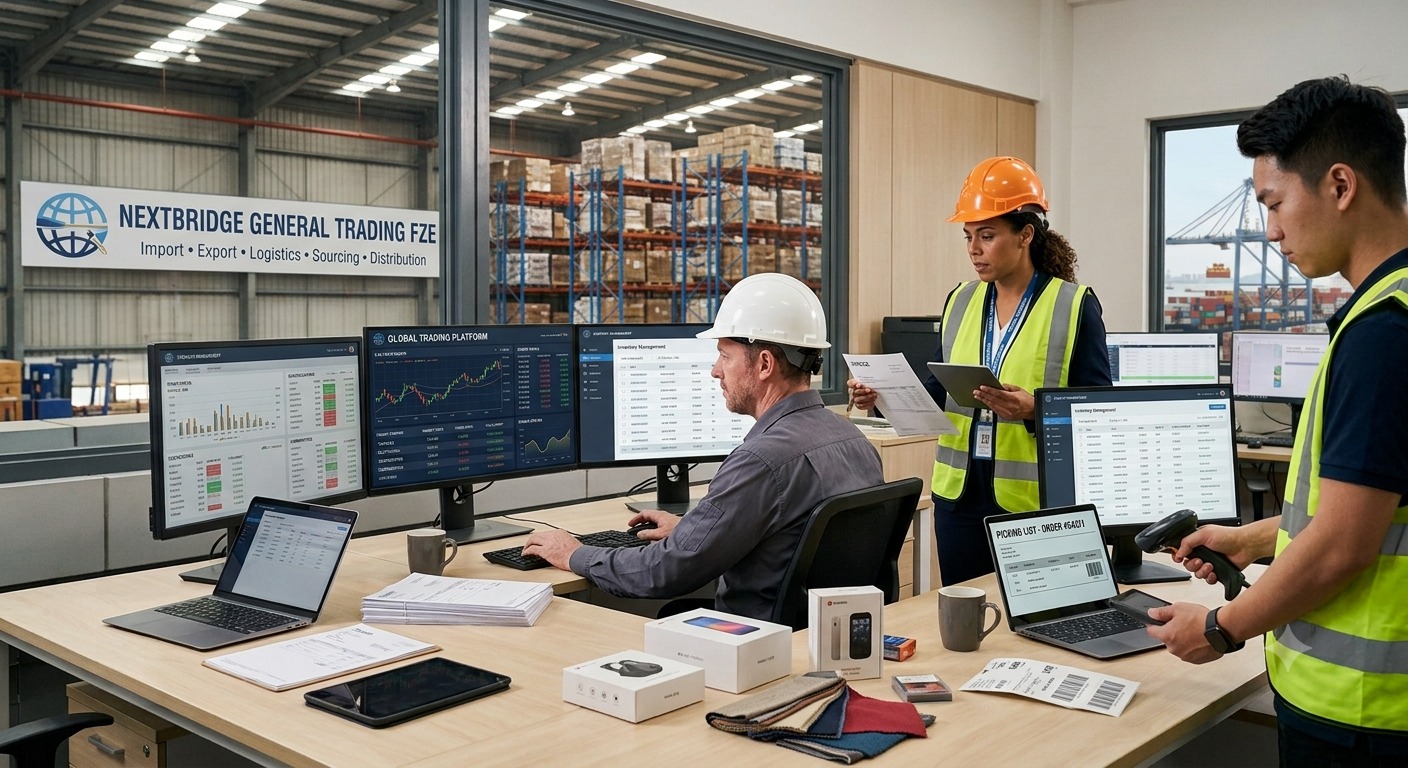
Emerging markets represent the future of global economic growth. Countries across Africa, the Middle East, South Asia, and Southeast Asia are experiencing rapid urbanization, expanding middle classes, and increasing demand for everything from consumer goods to industrial equipment. Yet for foreign manufacturers and suppliers, accessing these markets presents formidable challenges: fragmented distribution networks, opaque regulatory environments, currency volatility, and the difficulty of identifying reliable local partners. This is where general trading companies play an indispensable role, bridging the gap between global supply and emerging market demand.
What General Trading Companies Do
General trading companies serve as comprehensive intermediaries in cross-border trade. Their core functions span four interconnected areas: sourcing — identifying and vetting suppliers across multiple product categories to meet buyer specifications; quality assurance — inspecting goods at source, ensuring compliance with destination-market standards, and managing certification requirements; logistics — arranging freight, customs clearance, warehousing, and last-mile delivery across challenging geographies; and distribution — connecting goods with wholesale buyers, retailers, or institutional purchasers in the destination market. Unlike specialized distributors who focus on a single product category or industry, general trading companies maintain diversified portfolios that span food and beverage, building materials, consumer electronics, industrial supplies, textiles, and beyond. This diversification provides resilience against sector-specific downturns and allows them to offer one-stop solutions to buyers who need consistent supply across multiple categories.
Market Access: Opening Doors for Foreign Suppliers
For a manufacturer in Europe, East Asia, or North America, entering an emerging market independently can be prohibitively expensive and risky. The costs of establishing a local entity, hiring staff, navigating regulatory approvals, building a distribution network, and managing collections from fragmented customer bases often outweigh the near-term revenue potential. General trading companies solve this problem by serving as an established, trusted channel to market. They maintain warehouses, logistics networks, and customer relationships that a new entrant would take years to develop. For the foreign supplier, working through a trading company means immediate access to a ready-made distribution infrastructure, reduced credit risk — since the trading company typically handles collections — and the ability to reach multiple emerging markets simultaneously from a single relationship with a UAE-based or regionally headquartered partner.
Risk Mitigation in Volatile Environments
Emerging markets inherently carry risks that are less prevalent in developed economies: sudden currency devaluations that can wipe out margins, political instability that disrupts supply chains, regulatory changes that alter import duties or product requirements overnight, and weak contract enforcement that makes dispute resolution difficult. Experienced general trading companies have developed sophisticated approaches to managing these risks. They diversify their market exposure across multiple countries to avoid concentration in any single jurisdiction. They maintain relationships with financial institutions that provide trade finance instruments — letters of credit, credit insurance, and currency hedging — that protect both suppliers and buyers. They stay continuously informed about regulatory developments through local networks, allowing them to adapt quickly to new requirements. And perhaps most importantly, they have the on-the-ground presence and local relationships to resolve problems that would be impossible to address from a distant headquarters.
Local Knowledge and Relationship Building
Business in emerging markets runs on relationships — and relationships cannot be built remotely. General trading companies invest years in developing networks of trust with customs officials, port operators, logistics providers, wholesale buyers, and government agencies. They understand the unwritten rules of how business gets done in each market: which documentation matters and which is a formality, how to navigate bureaucratic processes efficiently, which local partners are reliable and which should be avoided. This localized knowledge extends to cultural nuances as well — negotiation styles, business etiquette, and communication preferences that vary significantly across the diverse markets of the Middle East, Africa, and Asia. For foreign companies accustomed to transaction-based business cultures, this relationship-driven environment can be bewildering and costly to navigate without an experienced local partner.
Case Examples from the Middle East and Africa
The value of general trading companies is best illustrated through real-world examples. In East Africa, a UAE-based trading company might source refined sugar from Brazil, packaged rice from India, and cooking oil from Malaysia, consolidate these shipments at Jebel Ali Port, and distribute them to wholesale buyers in Kenya, Tanzania, Uganda, and Ethiopia — markets that would be logistically challenging and commercially impractical for each individual supplier to serve directly. In West Africa, trading companies facilitate the import of building materials — cement, steel rebar, electrical fittings — from Asian manufacturers to supply the region's construction boom, managing the complex logistics of ports with limited infrastructure and inland transport networks that require specialized local knowledge. In Central Asia, general trading companies connect markets in Kazakhstan, Uzbekistan, and Turkmenistan with consumer electronics, textiles, and food products sourced through the UAE's re-export ecosystem, navigating customs unions, language barriers, and political sensitivities that would deter most direct exporters.
Conclusion: The Continued Relevance of Trading Companies
In an era of digital platforms, direct-to-consumer models, and e-commerce globalization, one might assume that traditional general trading companies would be losing relevance. The opposite is true — particularly in emerging markets, where digital infrastructure is uneven, logistics remain challenging, and trust-based relationships are the currency of commerce. Trading companies have evolved with the times, incorporating technology for supply chain visibility, digital ordering platforms for buyer convenience, and data analytics for market intelligence. But their core value proposition remains unchanged: they solve the fundamental problems of trust, access, and execution that make cross-border trade in emerging markets difficult. For foreign suppliers seeking growth beyond their home markets, and for emerging-market buyers seeking reliable access to global goods, general trading companies will remain essential partners for decades to come.
Interested in General Trading?
Nextbridge General Trading FZE connects markets across the Middle East, Africa, and beyond. Contact us to discuss your trading requirements.
 0553226835
 info@nextbridgegeneraltrading.com
 Chat on WhatsApp